Choose an in-ground fence for small, oddly shaped or wooded yards and very large properties; a wireless fence for a quick, portable circular boundary on a smaller lot; and a GPS fence for larger, open properties or travel, if you can accept charging the collar every day or few days and, on some models, a subscription.
How each technology draws the boundary
In-ground fences send a radio signal along a buried wire. The collar warns and corrects when the dog nears the wire. PetSafe's kits include 500 ft of wire for about a third of an acre and expand to 5 to 25 acres with more wire; SportDOG states kits expandable to 100 acres.
Wireless (radio) fences use a transmitter inside your home that projects a circle. PetSafe's Stay & Play models adjust to cover up to 3/4 acre, a radius of up to 105 ft in every direction. The boundary is always a circle, centered on the transmitter.
GPS fences keep the boundary on the collar, which compares its satellite position with the shape you drew. No wire or transmitter is needed, so the fence can go anywhere, but accuracy depends on a clear view of the sky.
Which yard each one suits
| Technology | Smallest practical yard (maker examples) | Shape | Main limitation |
|---|---|---|---|
| In-ground | Any yard the wire can circle | Any shape | Installation: a weekend of trenching |
| Wireless | A circle that fits inside your yard | Circle only | Boundary can't follow property lines |
| GPS (Halo) | 900 sq ft fences (Halo) | Any shape | Membership required; ~2-day battery |
| GPS (others) | About 1/3 to 3/4 acre | Any shape | Trees and buildings reduce accuracy |
Use the coverage planner to check your own yard against the makers' stated ranges.
What they cost over time
In-ground and wireless kits have no subscriptions; the ongoing costs are batteries and, for in-ground, wire repairs. GPS fences split: some need a plan to work at all (Halo; PetSafe's Guardian GPS 2.0), others work without one and sell tracking as an option (SpotOn) or have no plan at all (PetSafe's Guardian GPS, Dogtra's GPS fences).
See our GPS fences without a subscription and the subscription calculator for plan totals over one to three years.
The limits every owner should know
- None of these is a physical barrier. A motivated dog can cross, and nothing stops other animals coming in.
- All rely on correction at the boundary, usually including static. The American Veterinary Society of Animal Behavior recommends reward-based methods for all dog training and states that aversive methods should not be used. If you choose a correction-based fence, involve a qualified trainer.
- Makers set minimum dog ages and weights, often 6 months and 5 to 25 lb. Follow them.
Products mentioned
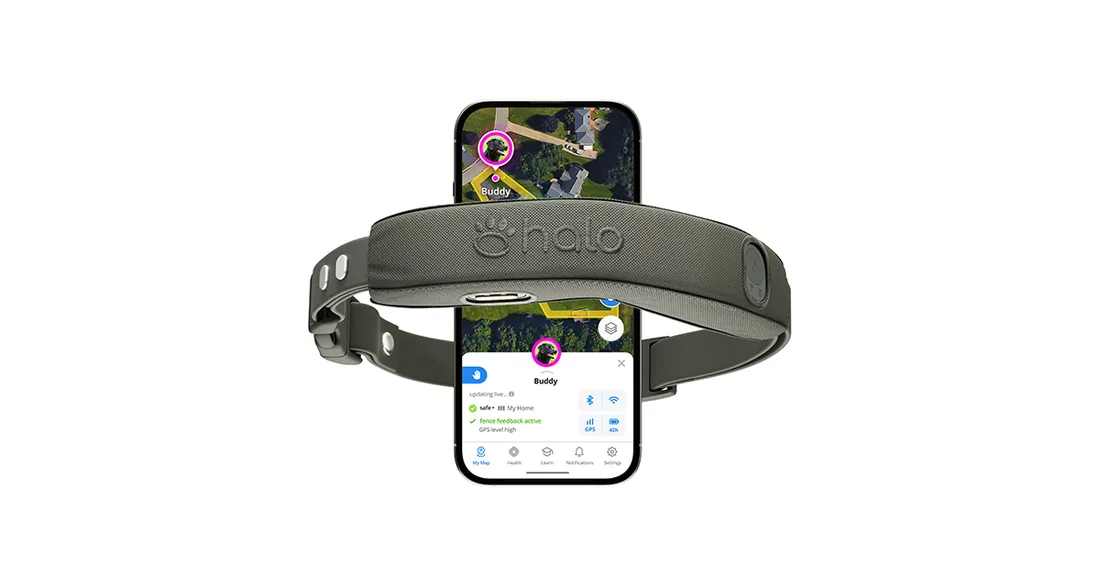
Halo Collar 5
Fences from 900 sq ft upward, stored in the collar; membership required.
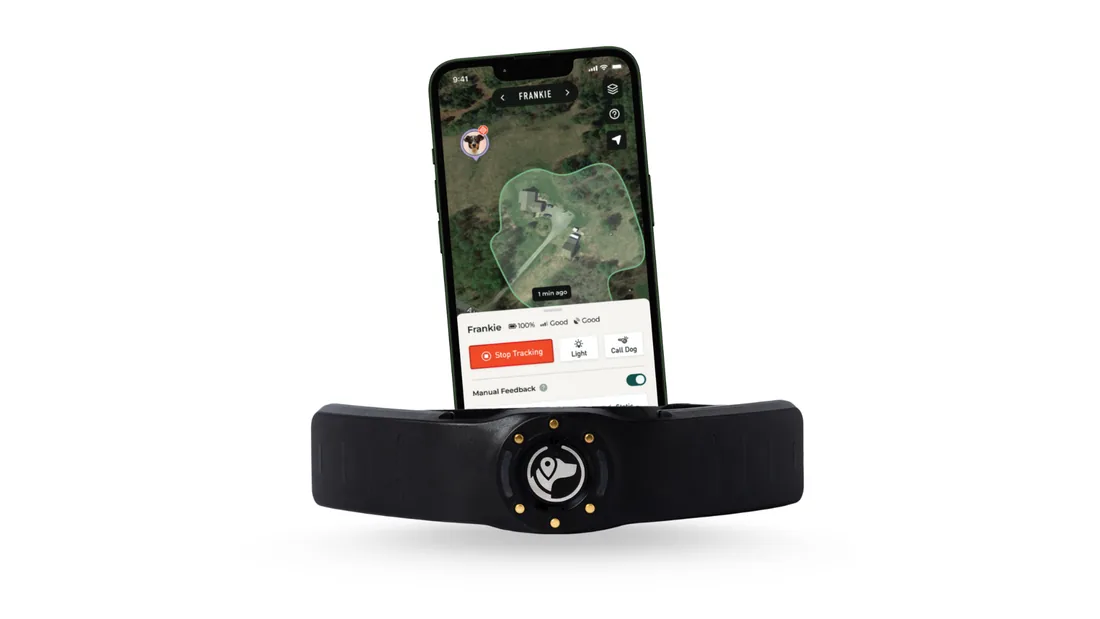
SpotOn GPS Dog Fence (Nova Edition)
Fencing works without a plan; tracking is an optional add-on.
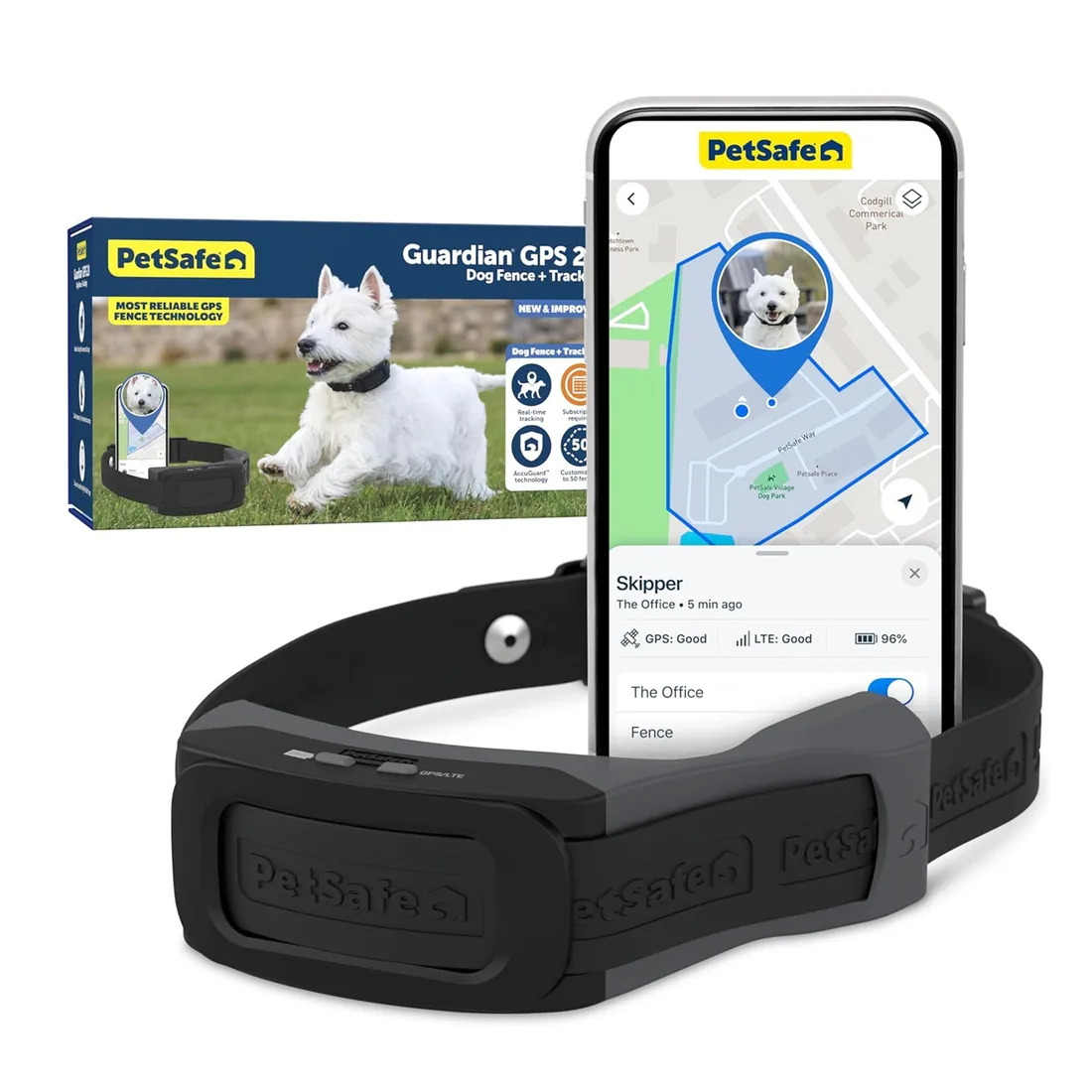
PetSafe Guardian GPS 2.0 Dog Fence + Tracking
Dual-frequency GPS, up to 70 hours per charge; plan required.